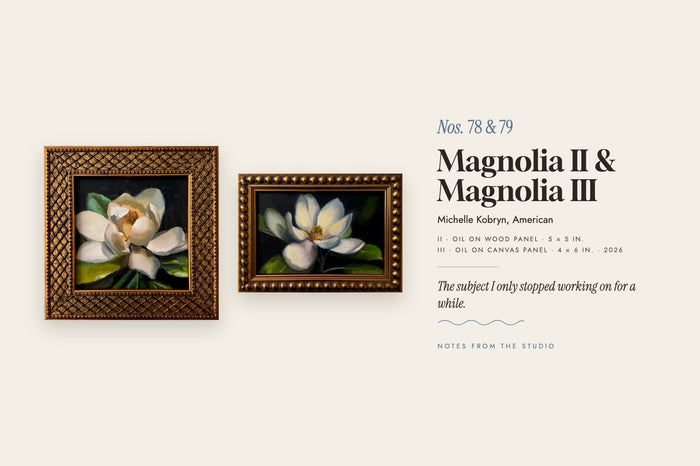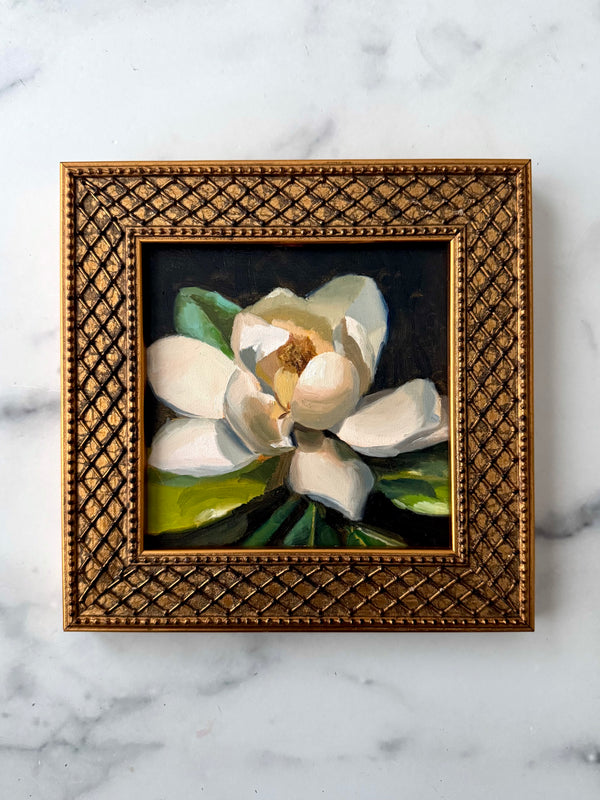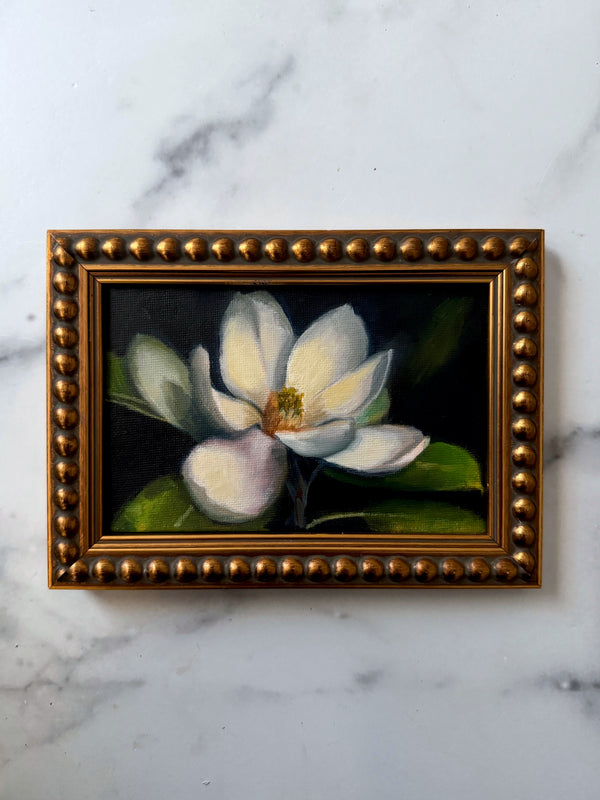
Magnolias are older than bees. The family goes back something like ninety-five million years, which is well before there were any bees to speak of, so the flower had to be built for the pollinator that did exist at the time, which was beetles. That’s why a bloom is put together the way it is — those thick, leathery segments, which aren’t technically petals at all but tepals. They’re that tough because a beetle is a clumsy, chewing, blundering houseguest, and the flower had to be able to survive the visit. Once you know that, the whole thing looks different. All that showiness and heavy perfume isn’t a compliment to us. It’s an advertisement aimed at an insect that was already ancient when the dinosaurs were still around, from a tree that has never seen any particular reason to update.
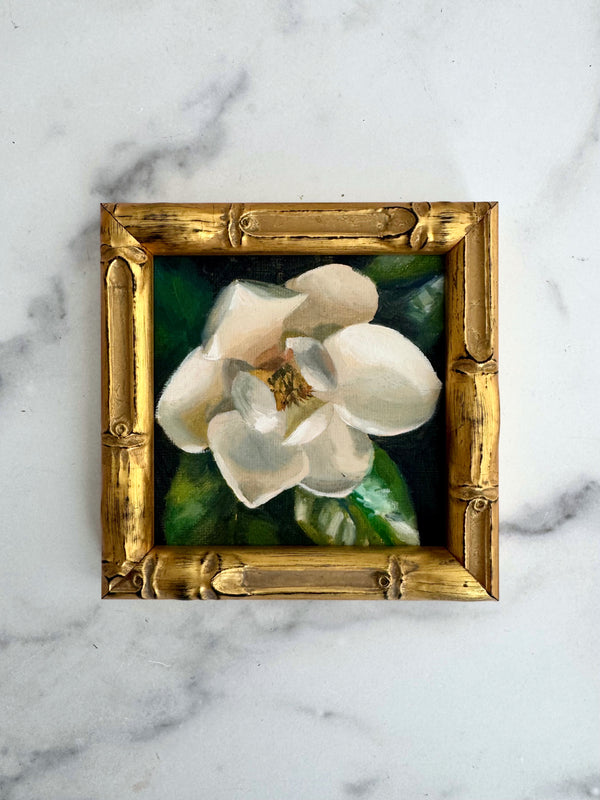
Everyone calls a magnolia white, and nobody who has tried to paint one thinks so for more than about five minutes. There’s yellow in it, especially toward the middle where it warms up around the cone. There’s green rising out of the base of each tepal, cool and a little grayed. And down in the deep folds, where the light bounces around and gets confused, there’s a real blue — faint, but unmistakable once you’ve caught it. Mix pure white and you get a piece of paper. Mix yellow and green and blue in the right proportions and you get something that reads as white and is nothing of the kind, which is the great joke of painting anything pale.
My oldest started high school last week. I’ve been doing the math I promised myself I wouldn’t do, and it comes out to a handful of years before she doesn’t live here anymore, which is exactly how it’s supposed to go and is also not what I would choose if anyone were asking. So I have gotten greedy about time with her, no matter how ordinary. She was standing in the kitchen eating a sandwich, saying nothing in particular, and she looked out the window and said there was a magnolia flower.
There was — low, only about four feet off the ground, and in perfect, full bloom. That tree does most of its blooming in May, so this was the last of the season and about as late as it has ever gone. We went out and stood in front of it with our sandwiches, marveling that we’d caught it at exactly the right hour — wide open, unmarked, not a brown edge on it. By that evening it had wilted and gone brown. One day was all it had, and we happened to be in the kitchen for it.
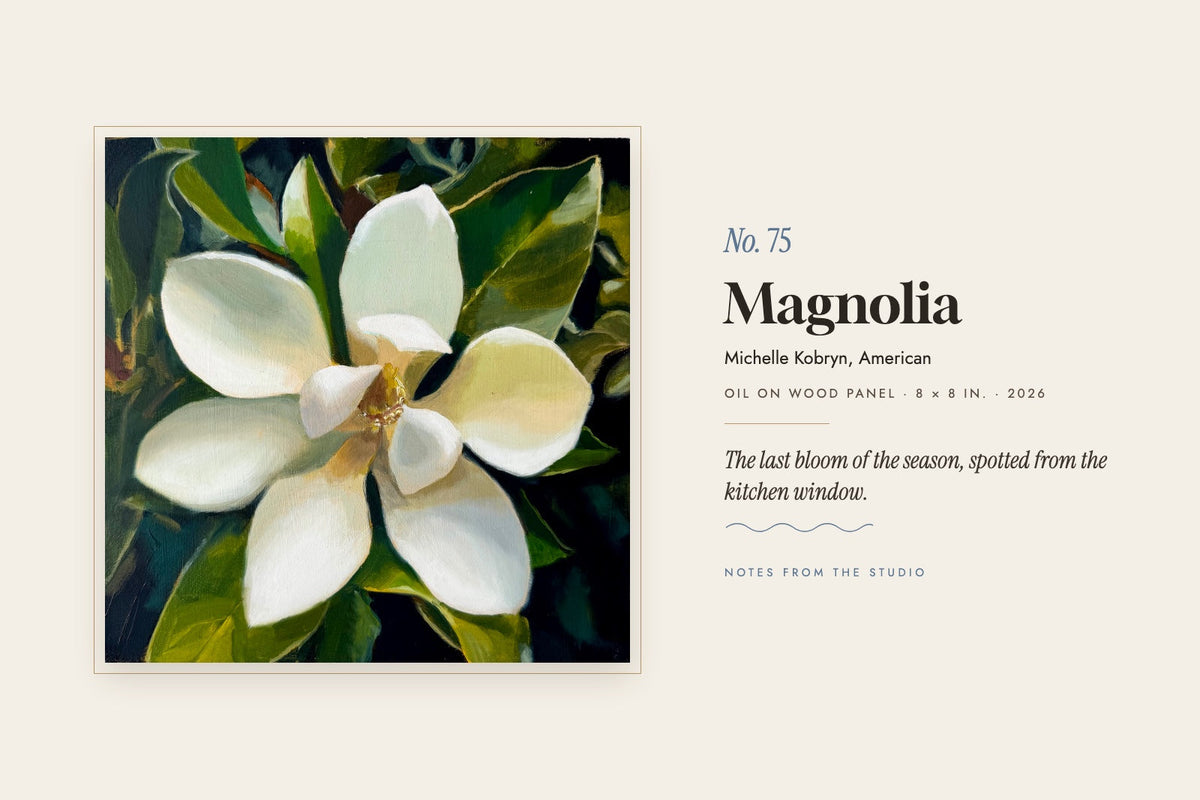
So I painted it, which is the only thing I know how to do about a day like that. But the part I keep coming back to isn’t the flower. It’s that she looked up, and then she told me.
I spent a lot of years believing a life was made of its big moments — the birthdays, the anniversaries, the trip you saved for. Those are the ones you photograph and put in a frame. But I’ve come to think they’re only the punctuation. What a life is actually made of is the small stuff, and specifically the small stuff you happen to be sharing with somebody: a sunset neither of you says anything about, a card game on a Sunday morning, a joke that stopped being funny to anyone outside the house years ago. A magnolia blooming in late August, four feet off the ground, on an ordinary Tuesday.
Little nothings. The tree would have bloomed and browned whether or not a single person glanced out a window, and nearly everything worth noticing works the same way. It goes on constantly and it asks nothing of us. It only becomes yours if you’re moving slowly enough to catch it, and it only stays with you if there’s somebody standing there to catch it too.
She could have said nothing. Instead we went out and stood in front of a flower with our sandwiches, in the middle of the day, for no particular reason at all. That’s what I painted — and it’s why I paint any of this. A picture on a wall can transport you to a happy memory, most of the time an ordinary one you’d otherwise have let go.

No. 75 ∙ Magnolia
Oil on wood panel · 8 × 8 in. · 2026 · framed in a warm gold fluted frame
This painting has found its home. See the original, or bring home a fine art print.
Join my Collector’s Circle for first looks at new paintings, early access to originals, and notes from my studio.