There’s a myth that collecting art is something other people do: people with money and credentials and a dealer on speed dial. I’d like to retire that myth in the first paragraph, because it keeps wonderful people from ever owning a single thing they love. You don’t need a fortune or an art history degree. You need an eye, a little patience, and a few practical things nobody bothers to explain.
I come at this from both sides of the wall. I studied art history and then museum studies, and spent my internships at the Smithsonian behind the scenes, learning how museums care for the objects in their collections. Now I paint small still lifes in oil, one at a time, and I watch people choose the paintings they want to live with. This is what I’ve learned.
Buy what you love
Everything else follows from that. You’ll hear plenty about what is going to appreciate. Most of it is noise. The most reliable way to be happy with your collection in twenty years is to have chosen things you wanted to look at every day. If a piece also turns out to be a good investment, treat that as a gift, not a plan.
The small flutter you feel in front of a painting is information, and it’s the most important information you have. Ask yourself a few honest questions: Can I picture walking past it every morning and still noticing it? Does it remind me of something in my own life? If it were gone tomorrow, would I be sorry?
Your taste is already written all over your house: in the colors you keep close, the china you never put away, the flowers you plant every spring. Taste isn’t something you have to acquire so much as something you learn to recognize.
Collect slowly
The best collections are grown, not assembled. Some of the loveliest homes I know were furnished over decades: a painting bought on an anniversary, one inherited, one found on a trip. Each arrived with a story, and the stories are what make a room feel like it belongs to someone.
- Keep a wish list. If you still love a piece a month later, that tells you something.
- Mark the seasons of your life. A small painting for a new house, a birthday, a child leaving home. Years later, the painting carries the season with it.
- Buy one good thing rather than three easy ones. A single original you love will outlast a wall of decor.
- Follow a few artists closely, so you’ll recognize a special piece when it appears.
The case for small paintings
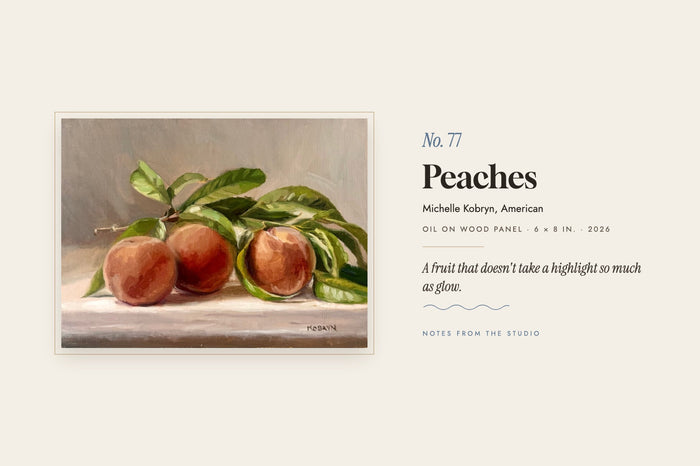
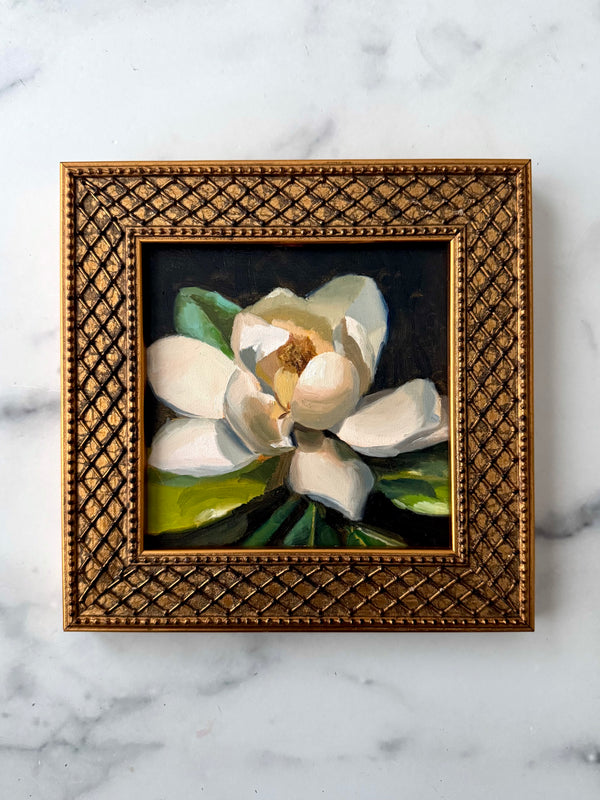
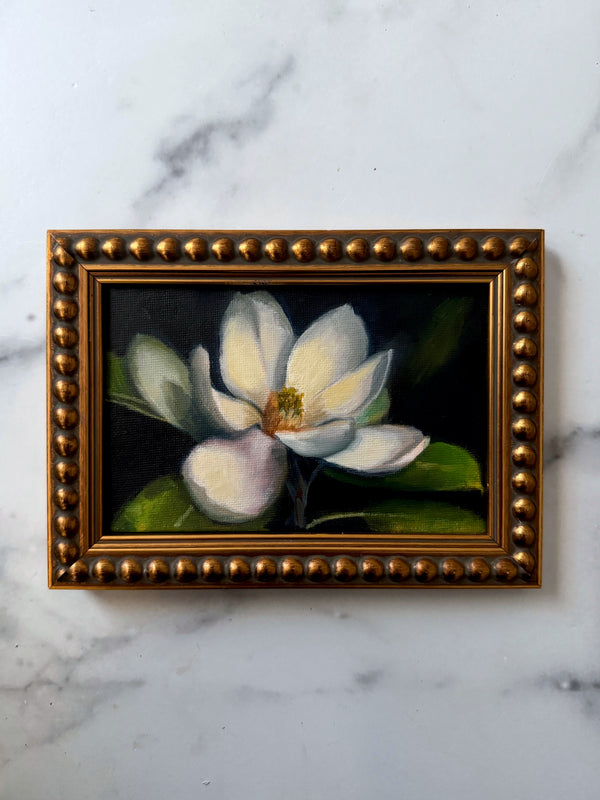
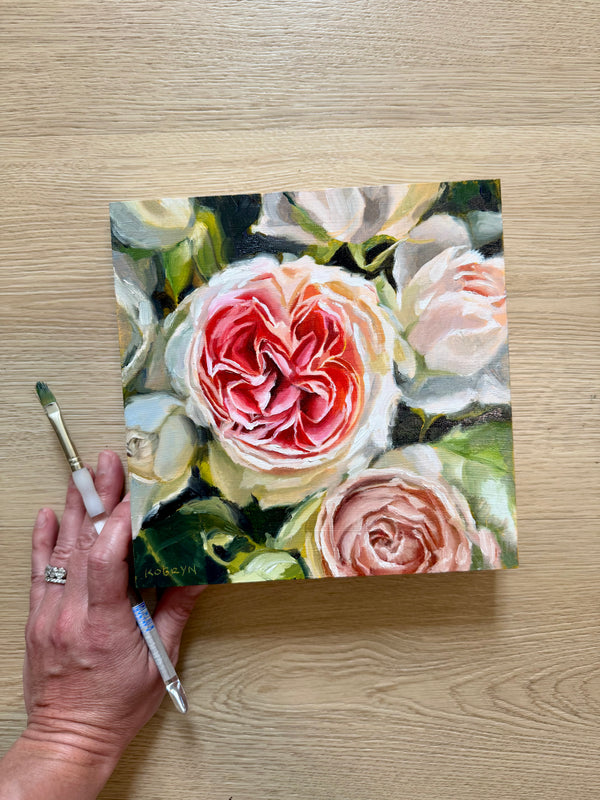
Most of my paintings are small, between four and eight inches on a side. People are sometimes surprised by that, as if a painting had to be large to count. But the still life began as a domestic art. For centuries, small panels of fruit and flowers hung in kitchens, studies and bedrooms, made to be seen up close, at the scale of the table they were painted on.
Small works fit where large art can’t: a bookshelf, a windowsill, a bedside table, a powder room, the short wall beside a door. They move with you from room to room. They make owning a real, signed, one-of-a-kind painting possible. And they make lovely gifts. You can see the small paintings I have available now in Minis.
How to layer art on shelves and tables
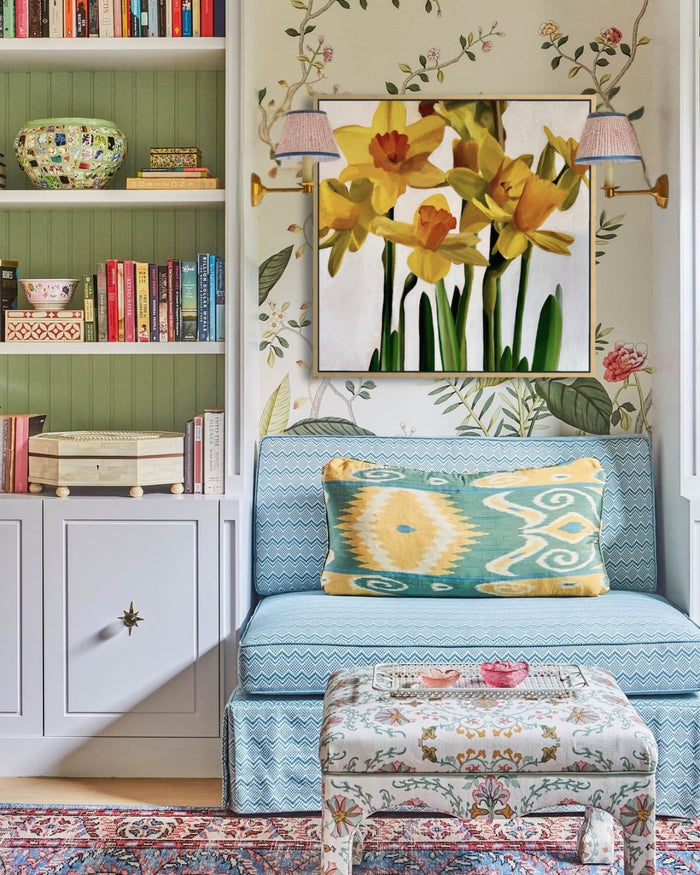
Layering simply means letting art and objects overlap, leaning rather than hanging, so an arrangement has depth. Think of it as composing a still life of your own.
- Start with an anchor at the back: a mirror, a larger painting, or a tall lamp.
- Lean, then overlap. Set a small framed painting in front and slightly to one side, covering a corner of the piece behind it.
- Vary the heights with a ginger jar, a stack of books, a candlestick, or a small easel or plate stand.
- Add one living thing: a garden cutting, lemons in a bowl, a branch of magnolia leaves.
- Repeat a color. A blue-and-white bowl beside a painting with blue in it ties the two together.
- Group in odd numbers, and leave a little air. If the eye has nowhere to rest, take one thing away.
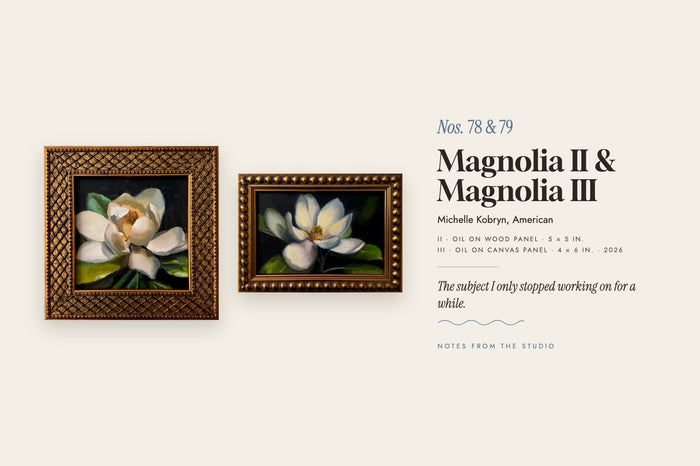
On the wall, hang small work lower than you think. Galleries center art about 57 to 60 inches from the floor, but above a sideboard or console, a small painting looks best 6 to 10 inches above the furniture so the two read as one arrangement. Two or three small paintings hung two or three inches apart have the presence of one larger work.
A little paperwork goes a long way
In museums, every object has a file. Collectors call an artwork’s documented history its provenance, and for a painting bought directly from a living artist it can be wonderfully simple: keep your receipt with the title, size, medium and date, the artist’s contact details, any note that came with the piece, and a photograph of the front and back. If you’re buying older or higher-value work from someone other than the artist, ask what documentation exists and who issued it, and don’t be shy about checking. Professionals expect the question.
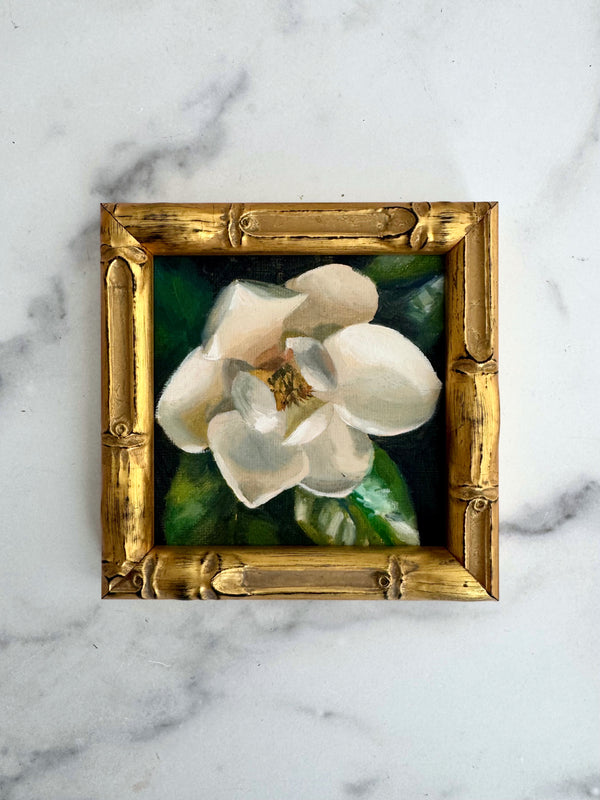
My paintings are signed on the front and back, and each original has its own catalogue number, so No. 75 will always be the August magnolia and no other painting.
Living with an oil painting
Oil paintings are sturdier than people expect. Keep them out of strong direct sun, away from radiators and steamy bathrooms, and dust them with a soft, dry brush. Never use water or cleaners on the paint, and take any damage to a professional conservator. Oils don’t need glass, so you can see the brushwork and the way light moves across the surface.
When the painting you want doesn’t exist yet
A commission is a painting made for you, of something that already belongs to your life. Because I paint still lifes, the best commissions are the ordinary, beloved things of a household: a bowl that was your grandmother’s, flowers from your own garden, the fruit from a tree your family planted, a wedding flower.
I accept a small number of commissions each year, usually booked a season ahead. If you have something in mind, write to me at hello@michellekobryn.com, and attach a photo if you have one handy. There’s a full section on how commissions work in the guide below.
Free guide
A last word
Collecting art isn’t a test you can fail. It’s a long, pleasurable conversation between you and the things you find beautiful, and it deepens as your eye sharpens and your shelves fill. Start small. Buy what you love. Keep your paperwork. Ask your questions without apology. And give yourself decades, not weeks.
The first piece is always the hardest, because it’s the one that turns you from someone who looks at art into someone who lives with it. After that, you’re a collector.
See available paintings, browse fine art prints, or join the Collector’s Circle for first looks at new work.